
Introduction
Rehabilitation and sports performance are often regarded as distinct domains—one centered on recovery and the other on athletic optimisation. The truth is they are two sides of the same coin. Whether you are recovering from an ACL tear or training to enhance your power on the field, strength and conditioning (S&C) principles are critical in both restoring function and maximising performance.
At Syracuse Sports Acupuncture & Functional Rehabilitation, we connect rehabilitation with high-level training, helping athletes and active individuals transition seamlessly from injury recovery to peak performance.
- Understanding the Intersection of Rehab and Sports Performance
Many rehabilitation programs focus solely on pain relief and restoring basic function, but this often leaves athletes vulnerable to re-injury. Conversely, many strength programs prioritize performance metrics without considering underlying weaknesses from past injuries.
The key to sustainable health and performance lies in a progressive, movement-based approach that respects both tissue healing timelines and the neuromuscular demands of sport.
- Key Components of a Strength & Rehabilitation Program
- 1. Strength Training as the Foundation for Recovery
Rebuilding strength isn’t just about lifting weights; it’s also about retraining the neuromuscular system to generate force efficiently and painlessly. We focus on four primary movement patterns for lower-body rehabilitation and performance:
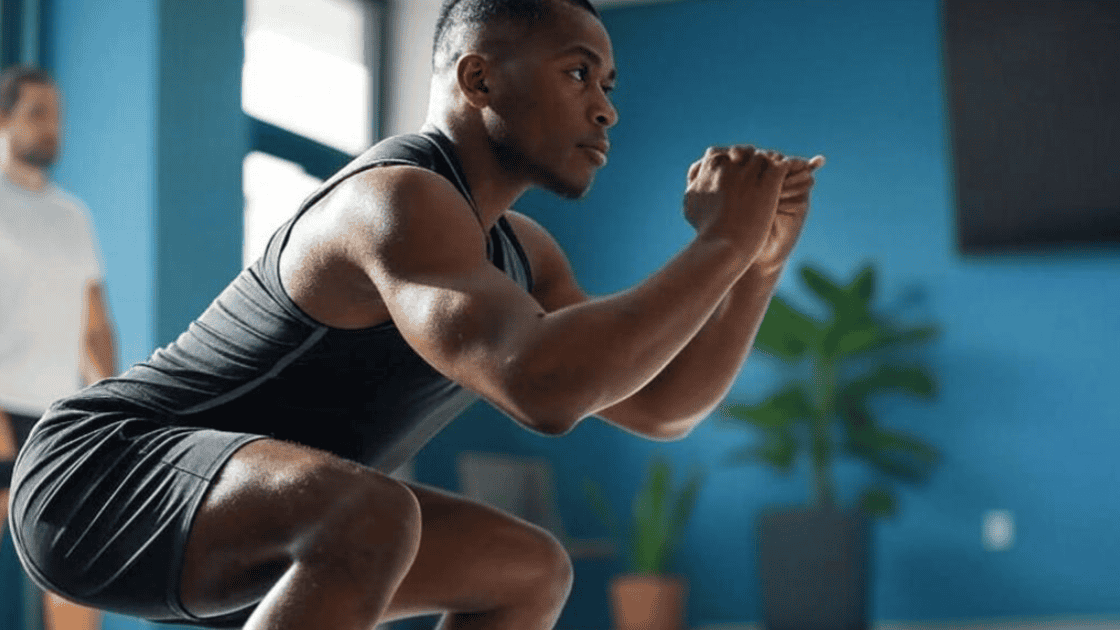
- Squatting – Essential for knee and hip function, requiring control and symmetry.
- Hinging – Strengthens the posterior chain (glutes, hamstrings, and back) to stabilize movement.
- Split Pelvis (Lunges & Step-Ups) – Improves single-leg stability, essential for athletic performance.
- Single-leg work – Addresses imbalances that may predispose an athlete to injury.
Each pattern may be adjusted according to injury status, limitations in range of motion, and loading capacity.
- Example: A post-op ACL patient might start with goblet squats to a box, progressing to rear-foot elevated split squats as strength increases.
- 2. Planes of Motion & Why They Matter
Sports occur in three dimensions, yet many rehabilitation and training programmes concentrate solely on movements in a straight line (sagittal plane). The most resilient athletes train across all planes of motion:
- Sagittal (Forward-Backward) – Sprinting, deadlifts, squats.
- Frontal (Side-to-Side) – Lateral lunges, defensive movements in basketball or soccer.
- Transverse (Rotational) – Throwing, swinging, cutting movements.
Many injuries arise when an athlete cannot control movement in the frontal or transverse planes. A rehabilitation programme that solely includes sagittal-plane exercises does not adequately prepare the athlete for the demands of their sport.
- For example, a baseball player recovering from a knee injury should include rotational med ball throws and lateral bounding drills to regain multi-planar control.
- 3. The Role of Plyometrics in Rehab & Performance
Plyometrics—jumping, bounding, and explosive movements—are critical for restoring elastic strength and neuromuscular coordination after injury. However, they are programmed differently for rehab and performance.
Rehab Focus: Slow, controlled landings to reinforce proper mechanics.
Performance Focus: Maximizing ground reaction forces for speed and power.
Rehabilitation Progression:
- Assisted pogo jumps → Box jumps → Depth drops → Single-leg hops
- Emphasis on landing mechanics first, then force production.
Performance Progression:
- Weighted jumps → Sprint mechanics → High-velocity rebound jumps
- Emphasis on max force output and energy transfer.
– Example: An ACL patient five months post-op starts with double-leg box jumps, while a healthy athlete in a performance phase might train single-leg depth drops into lateral bounds.
- 4. How We Customize Strength & Rehabilitation Plans at Syracuse Sports Acupuncture
Our distinctive approach incorporates sports medicine, acupuncture, and advanced rehabilitation techniques to deliver a comprehensive, personalized recovery system.
🔸 Step 1: Functional Assessment
- Detailed movement analysis to identify asymmetries and imbalances.
- Muscle activation testing to pinpoint neuromuscular deficits.
- Neurdynamic assessment to identify ways your nervous system may not be able to stretch, slide or otherwise adapt to movement..
🔸 Step 2: Strength & Movement Re-Education
- Restore coordination between deep core stabilizers and superficial / global stabilizers to ensure proper transfer of loads through the body.
- Restore normal, controlled segmental movement within the spinal column .
- Improve stability and range of motion in the patient’s hips, shoulders, ankles and wrists.
🔸 Step 3: Progressive Plyometrics & Sport-Specific Loading
- Focus on patient’s ability to perform sport-specific movement patterns.
- Fine tune patient’s coordination and quality of complex movements
- Improve patient’s ability to perform explosive movements.
- Focus on return-to-sport testing to ensure full readiness.
This approach minimizes re-injury risk and maximizes long-term resilience.
- Why Choose Syracuse Sports Acupuncture for Rehab & Performance?
Unlike conventional clinics focusing only on passive recovery, or joint specific rehab, we take a functional, full body approach. We combine evidence-based functional assessment, advanced acupuncture techniques, and movement re-education.
Our approach includes:
Expert board-certified acupuncturists and rehab specialists.
Individualized treatment plans focusing on long-term resilience, not just symptom relief.
Cutting-edge therapies like dry needling, neuromuscular retraining, and trigger point therapy.
Our goal is to relieve your pain and restore your core strength, prevent future injuries, and optimize your performance.
- Take the Next Step Toward Pain-Free Movement
Whether you’re recovering from surgery, coping with persistent injuries, or aiming to improve athletic performance, our integrated rehab and performance programmes can assist you in achieving your goals.
Call us today at (315) 935-5700 to schedule your comprehensive evaluation.
Book your appointment online
Move better. Recover faster. Perform stronger.